

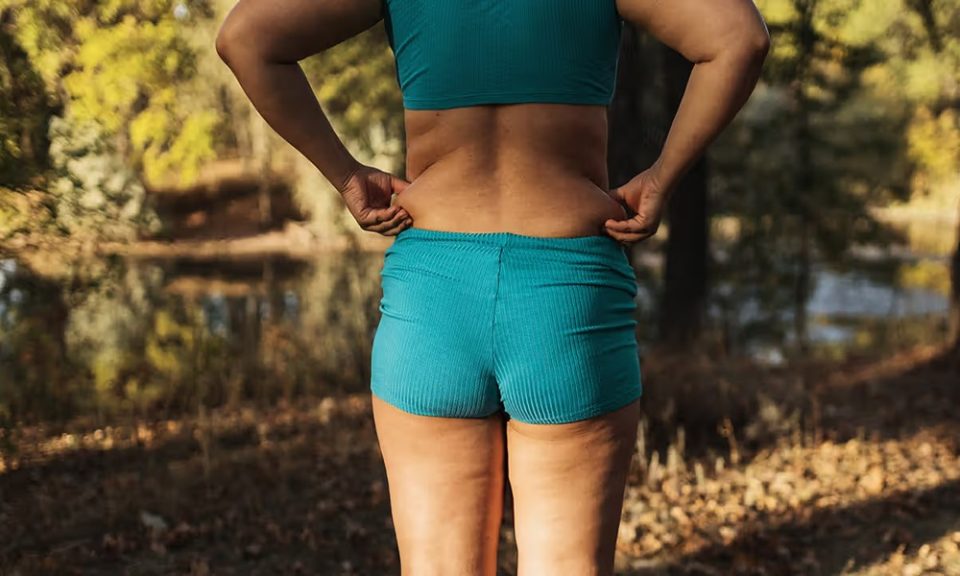
Love handles resist fat loss because the hip and flank region has an alpha-2 to beta receptor ratio as high as 9:1 – meaning the fat-release signal is actively blocked at a biological level. This explains why love handles persist through diet and training phases while the rest of the body responds visibly. The answer is not effort. It’s receptor biology.
The specific role of alpha-2 receptors in love handle fat storage – and the protocols that actually address the receptor environment rather than just creating a caloric deficit – is explained in this love handles alpha-2 receptors guide, covering the complete hormonal and receptor science behind this stubborn fat site.
What Are Alpha-2 Receptors?
Fat cells throughout the body carry two types of adrenergic receptors: beta receptors and alpha-2 receptors. Both are activated by catecholamines – the adrenaline and noradrenaline released during exercise and caloric restriction. But they have opposite effects on fat cell behaviour. These receptors are the primary control points through which the nervous system instructs fat cells whether to release stored energy or to hold it.
Beta-adrenergic receptors, when activated, trigger a molecular cascade that activates hormone-sensitive lipase (HSL), the enzyme that breaks down stored fat and releases it into circulation. This cascade operates through the cAMP second messenger system: catecholamines bind to beta receptors, activating adenylyl cyclase, which increases intracellular cAMP, which then activates protein kinase A (PKA), which phosphorylates HSL into its active form. Once activated, HSL cleaves triglycerides into free fatty acids and glycerol – the actual process of fat mobilisation.
Alpha-2 receptors, when activated by the same catecholamine signal, inhibit adenylyl cyclase – blocking the cascade before it can activate HSL. Alpha-2 receptors are, in effect, brakes on the fat release process. When noradrenaline or adrenaline bind to alpha-2 receptors, they trigger inhibitory G-proteins (Gi) that suppress cAMP production, preventing the entire cascade from initiating. Alpha-2 receptors are not inert participants – they actively suppress the machinery of fat mobilisation.
Why Love Handles Are Alpha-2 Dominant
Fat cells are not identical across all body regions. Different anatomical locations have different ratios of beta to alpha-2 receptors, and this ratio determines how readily fat is released when catecholamine levels are elevated. This regional variation evolved as a metabolic preference – the body distributes receptor types based on energy storage strategy and survival advantage in ancestral conditions.
The hip, flank, and lower abdominal region – the love handle area – has one of the highest alpha-2 receptor densities in the male body. In this region, alpha-2 receptors can outnumber beta receptors by ratios of 9:1 or higher. Research comparing receptor density across abdominal sites shows that visceral adipose tissue and subcutaneous lower abdominal fat have substantially fewer beta receptors and proportionally more alpha-2 receptors than upper abdominal or chest fat. When catecholamines are released during a workout or in response to a caloric deficit, the love handle fat cells experience the same signal as fat cells elsewhere – but the signal hits primarily inhibitory receptors rather than activating ones.
The result: fat mobilises readily from beta-dominant areas (chest, arms, upper back, face) and barely from the alpha-2 dominant love handle region – even when overall fat loss is progressing well. A man can lose noticeable fat from his face and upper body while his love handles remain virtually unchanged, not due to exercise choice or diet adherence, but because the receptor biology of those specific fat stores actively resists mobilisation.
The Insulin Compounding Factor
Alpha-2 receptor dominance alone creates significant resistance to fat mobilisation from the love handle area. Chronically elevated insulin makes the situation worse by adding a second layer of HSL suppression.
Insulin directly suppresses HSL activity through phosphorylation. In a high-insulin environment – from frequent eating, high-carbohydrate intake, or insulin resistance – HSL is deactivated regardless of catecholamine levels. Combined with the alpha-2 receptor braking effect, love handle fat cells operate under a double suppression of the fat release pathway. The catecholamine signal arrives, hits alpha-2 receptors that suppress it, and simultaneously HSL is being actively deactivated by insulin-induced phosphorylation. Neither the first lock nor the second opens.
This explains why people who diet on high-carbohydrate, high-frequency meal plans often see rapid fat loss from responsive areas while love handles barely change. The hormonal environment is working against them in exactly the region they most want to change. A person eating six small meals per day with balanced carbohydrates might maintain insulin in the 8-12 μIU/mL range nearly all day – high enough to keep HSL suppressed in love handle fat cells, even during workouts or fasted periods.
Why Side Exercises Don’t Help
Side bends, oblique crunches, and love-handle-targeting exercises are popular but ineffective for reducing love handle fat. The reason is that fat loss is not localised to working muscles – fat is mobilised from storage sites based on receptor biology and hormonal signals, not by proximity to a contracting muscle. This is a consistent finding across decades of exercise physiology research: vigorous training of an adjacent muscle does not preferentially reduce fat from the nearby fat depot.
Side exercises do develop the obliques and lateral core – which can eventually improve the visual appearance of the hip area once fat is lost. But they do not accelerate fat loss from the love handle region, and loaded lateral exercises like side bends can actually increase the apparent width of the waist by developing the muscles beneath the fat. If love handles are still present, adding lateral muscle volume compounds the visual problem rather than solving it.
What Actually Works
Creating Consistent Low-Insulin Periods
When insulin is consistently low for extended periods – through time-restricted eating, fasted training, or reduced carbohydrate intake – the insulin suppression of HSL is removed. This makes the alpha-2 receptor braking effect the primary remaining obstacle, rather than two simultaneous locks on fat release. Extended fasting windows (16+ hours) allow basal insulin to drop to 3-5 μIU/mL, at which point HSL is no longer being actively suppressed by insulin and can be activated by catecholamine signals.
Carbohydrate reduction works through the same mechanism: sustained lower carbohydrate intake keeps meal-driven insulin spikes smaller and baseline insulin lower. A person maintaining a protein-adequate diet at 50-100g net carbohydrates per day will experience substantially lower average insulin than someone eating 200+ grams per day, creating more cumulative time for HSL activation in love handle fat cells.
Maximising Catecholamine Output
High-intensity resistance training and sprint-type intervals produce substantially higher catecholamine surges than moderate-intensity exercise. A higher catecholamine signal has a better probability of overcoming the alpha-2 receptor resistance in love handle fat cells. The intensity of the training stimulus is more important for love handle fat loss than the duration or volume. This is why steady-state cardio – even when performed for an hour – is often ineffective for love handle reduction: it produces catecholamine levels that are insufficient to overcome the alpha-2 receptor resistance combined with baseline insulin suppression.
Heavy compound lifts (squats, deadlifts, bench presses) and short, high-intensity intervals (30 seconds on / 90 seconds off) produce catecholamine concentrations that are 3-5 times higher than moderate aerobic exercise. This higher signalling strength matters specifically for alpha-2 dominant fat depots.
Combining Variables for Synergy
The most effective approaches combine low insulin state, high catecholamine stimulus, and patience with the biological timeline. Training in a fasted state (low baseline insulin + high acute catecholamine spike) targeting compound movements provides the strongest possible signal to alpha-2 dominant love handle fat cells. This approach still requires total energy deficit – the receptor environment determines which fat gets prioritised, not whether fat gets lost at all – but it shifts the prioritisation toward the love handle region.
Accepting the Biology
Even with an optimised approach, love handle fat is genuinely the last to go. The biology guarantees this. Understanding the mechanism prevents frustration and misdirected effort – and makes it possible to build an approach that’s actually suited to the problem. The goal is not to overcome alpha-2 receptor dominance entirely (that’s not possible without pharmaceutical intervention), but to stop working against it through high-insulin environments and low-intensity exercise patterns. Men who expect love handles to respond to the same strategies that quickly reduce upper body or facial fat are fighting receptor biology. Resetting expectations around the timeline – and recognising that love handle persistence reflects the body’s receptor distribution, not metabolic failure – is often the most important shift in approach.
Frequently Asked Questions
Why won’t my love handles go away even when I’m losing fat elsewhere?
Love handles contain fat cells with an alpha-2 to beta receptor ratio as high as 9:1, meaning the fat-release signal is actively suppressed in this region. While fat mobilises readily from beta-dominant areas like the chest and face, the love handle region resists the same hormonal signals. This is biological, not a reflection of effort.
Can I spot-reduce love handles with side exercises?
No. Fat loss is determined by receptor biology and hormonal signals, not by which muscle you train. Side bends and oblique exercises develop the muscles underneath, which can actually make the area look wider if fat is still present. These exercises won’t accelerate fat loss from the love handle region.
What’s the fastest way to finally lose my love handles?
Combine three approaches: maintain low insulin through extended fasting or reduced carbohydrate intake, perform high-intensity resistance training or sprints to spike catecholamines, and train in a fasted state when possible. This combination provides the strongest signal to alpha-2 dominant fat cells. Even optimised, love handle fat is typically the last to go.
Do alpha-2 receptors mean I’ll always have stubborn love handles?
Not necessarily. The goal is to stop working against the receptor biology-avoiding high-insulin states and low-intensity exercise that guarantee resistance. A targeted approach can shift fat loss prioritisation toward the love handle region, though the timeline will always be longer than for other body areas.
