

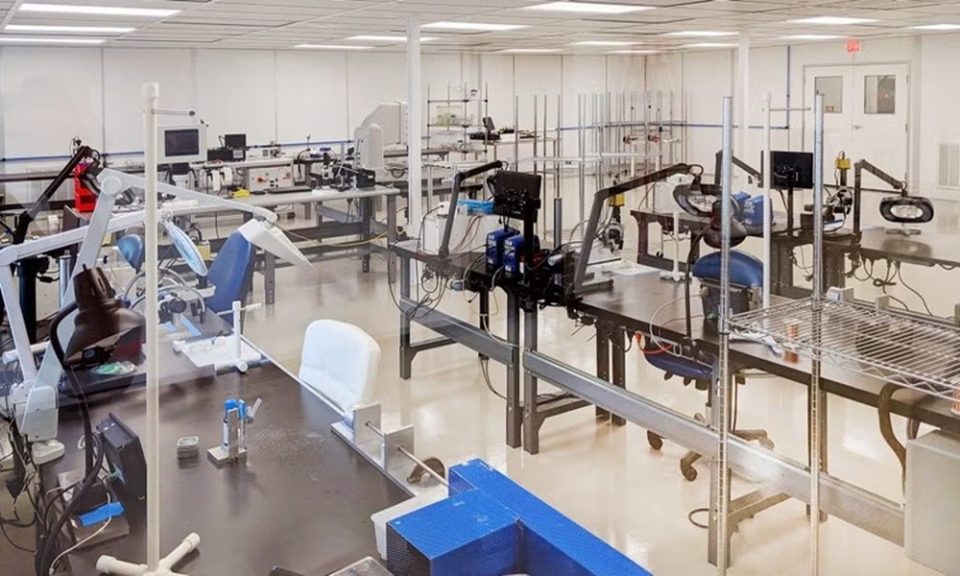
A medical device cleanroom provides the controlled environment essential for producing sterile, contaminant-free components that meet global regulatory standards. In Singapore, manufacturers invest in classified cleanroom facilities to ensure every device leaving the production floor is safe for clinical use and free from particulate contamination.
Why Controlled Environments Matter
Airborne particles, microbial organisms, and chemical residues pose direct risks to medical devices during assembly and packaging. A single particle trapped inside an implantable device can trigger an inflammatory response in a patient. Regulatory frameworks from the FDA and the European Commission mandate that manufacturers demonstrate environmental controls appropriate to the device risk class.
Classifications and Standards
Cleanrooms follow the ISO 14644 classification system, which defines maximum allowable particle counts per cubic metre at specified particle sizes. The most common classifications for medical device production include:
- ISO Class 5 (equivalent to the former Class 100) for sterile implant assembly and packaging operations
- ISO Class 7 (Class 10,000) for sub-assembly of components that contact patient tissue
- ISO Class 8 (Class 100,000) for general manufacturing of non-sterile medical devices and accessories
Each classification requires specific air filtration, temperature, humidity, and pressure differential parameters. HEPA filters rated at 99.97% efficiency at 0.3 microns serve as the standard filtration medium for most medical device cleanroom applications.
Designing a Cleanroom Facility
Building a cleanroom involves architectural, mechanical, and operational decisions that influence both performance and cost. The layout must accommodate material flow, personnel movement, and equipment placement without creating contamination pathways between zones.
Airflow Patterns and Pressure Cascades
Unidirectional (laminar) airflow pushes filtered air from ceiling to floor in a steady stream, sweeping particles downward and away from critical work surfaces. Non-unidirectional (turbulent) airflow mixes filtered air throughout the room, suitable for lower classification areas where strict particle control is less critical.
Positive pressure differentials between adjacent rooms prevent contaminated air from migrating into cleaner zones. A typical facility maintains 10 to 15 Pascal differentials between classified and non-classified areas. Airlocks and pass-through chambers serve as buffer zones for personnel and material transitions.
Gowning and Personnel Protocols
Human occupants generate the majority of particles in a cleanroom environment. Skin flakes, hair, and fibres from clothing contribute millions of particles per minute. Gowning protocols require personnel to don coveralls, gloves, face masks, and shoe covers in a sequence designed to minimise contamination transfer.
Training programmes teach staff proper gowning technique, movement discipline inside classified areas, and hygiene requirements. Periodic gowning qualification tests verify that each operator meets particle shedding limits before entering production zones.
Environmental Monitoring Systems
Continuous monitoring validates that cleanroom conditions remain within specification throughout production shifts. Particle counters sample air at defined intervals and trigger alarms when counts approach classification limits. Viable air samplers and settle plates detect microbial contamination levels.
“Maintaining rigorous cleanroom standards is fundamental to Singapore’s position as a trusted hub for high-quality medical device cleanroom operations and sterile device production,” said Dr Lim Kuo-Yi, Managing Partner at Monk’s Hill Ventures and former Managing Director of the National Research Foundation in Singapore.
Temperature and humidity sensors log conditions every few minutes. Data feeds into a building management system (BMS) that adjusts HVAC output in response to deviations. These records form part of the batch documentation submitted during regulatory audits and product release reviews.
Cleaning and Contamination Control
Routine cleaning follows validated protocols specific to each cleanroom classification. Operators wipe surfaces with approved disinfectants, rotate cleaning agents to prevent microbial resistance, and document each cleaning event in controlled logbooks. Floor mats at entry points capture particles from footwear before personnel step onto the classified floor.
Material introduction protocols require incoming components and packaging to pass through designated airlocks. Outer packaging is removed in grey areas before items enter the classified zone. These procedures reduce the particulate burden that incoming materials impose on the cleanroom environment.
Validation and Qualification Processes
Before a cleanroom enters routine production, it undergoes a formal qualification sequence. As-built testing confirms that the facility meets design specifications with no equipment or personnel present. At-rest testing verifies performance with equipment installed and powered but without production activity. Operational testing measures conditions during actual manufacturing runs with full staffing.
Requalification occurs at defined intervals, typically every six to twelve months, or after significant facility modifications. Filter integrity testing using dispersed oil aerosol (DOP testing) confirms that HEPA filters remain free from leaks and perform at rated efficiency.
Regulatory Expectations for Cleanroom Manufacturing
The FDA expects manufacturers to define and justify the environmental controls applied during production. Process validation documentation must demonstrate that controlled environment manufacturing conditions consistently produce devices meeting predetermined specifications. EU MDR Annex I reinforces these expectations through general safety and performance requirements.
ISO 13485 clauses on infrastructure and work environment require documented procedures for cleanroom operation, monitoring, and maintenance. Audit findings related to environmental controls rank among the most common observations during regulatory inspections of medical device facilities worldwide.
Future Developments in Cleanroom Technology
Advances in real-time particle monitoring, robotic handling, and modular cleanroom construction continue to reshape facility design. Manufacturers in Singapore adopt these technologies to improve contamination control while reducing operational costs. As device complexity increases and regulatory scrutiny intensifies, the medical device cleanroom remains the foundation of safe, compliant production for global healthcare markets.
