


The Fundamentals of Digital Marketing and Conversion Optimization
Digital marketing is a vast landscape, but at its core, its purpose is to connect businesses with their target audience and drive specific, measurable actions. These actions are what we refer to as “conversions.” Understanding what constitutes a conversion and why tracking it is paramount forms the bedrock of any successful digital strategy.
A conversion in digital marketing is simply when a website visitor completes a desired action. While we often associate conversions with a purchase, the reality is far more nuanced. These are typically referred to as macro conversions – the ultimate goals that directly contribute to revenue or a primary business objective. However, the path to a macro conversion is paved with smaller, equally important steps known as micro conversions. These can be anything from signing up for a newsletter, downloading an e-book, watching a product video, or even just spending a certain amount of time on a key page. As Optimizely explains, a conversion refers to a user achieving a goal by taking a desired action, and many other goals beyond a purchase can be set up.
Measuring and tracking these conversions is not just a best practice; it’s essential for business success. Without clear conversion data, digital marketing efforts are akin to navigating a ship without a compass. We wouldn’t know which campaigns are effective, which channels are delivering value, or where valuable resources are being wasted. Data-driven decisions allow us to optimize our spend, refine our messaging, and ultimately, achieve a higher return on investment. It allows us to move beyond mere traffic numbers and focus on tangible business outcomes, ensuring that every click and impression is working towards a quantifiable goal. This systematic approach to improving user actions is what we call holistic conversion strategies.
Measuring Success in Digital Marketing and Conversion Optimization
To effectively monitor and improve your digital marketing performance, a few key metrics are indispensable. These metrics provide a quantitative lens through which we can evaluate the efficiency and effectiveness of our campaigns.
Conversion Rate (CR) is perhaps the most fundamental. It’s the percentage of visitors who complete a desired action out of the total number of visitors. For example, if 100 people visit your landing page and 5 make a purchase, your conversion rate is 5%. Understanding this rate is crucial because it directly reflects the effectiveness of your website design, content, and calls to action. Industry benchmarks for conversion rates vary significantly; for instance, average conversion rates across industries hover around 2.35%, but this can fluctuate based on the sector, product, and device used. E-commerce sites might see different rates than SaaS companies or professional services.
Click-Through Rate (CTR) measures the percentage of people who click on a link after seeing an advertisement, email, or search result. While not a direct conversion metric, a strong CTR indicates that your messaging is resonating with your audience and effectively drawing them further into your funnel. A good CTR varies widely by channel; for email campaigns, 2-5% CTR is often considered successful, while Google Ads might see 3% for search and 0.46% for display. A high CTR ensures that your valuable traffic is actually reaching your conversion-focused pages.
Cost Per Acquisition (CPA), also known as Cost Per Conversion, calculates the total cost of acquiring one customer or achieving one conversion. This metric is vital for budgeting and understanding the profitability of your campaigns. If your CPA is too high, your marketing efforts might not be sustainable. By continuously monitoring and striving to lower your CPA, you ensure that your customer acquisition strategy remains economically viable and contributes positively to your bottom line. These metrics, when tracked diligently, provide a clear roadmap for performance monitoring and strategic adjustments.
The Economic Value of Conversion Rate Optimization (CRO)
In the field of digital marketing, the pursuit of more traffic often dominates the conversation. However, a smarter, more sustainable approach lies in optimizing the traffic you already have. This is where Conversion Rate Optimization (CRO) shines, offering a significantly more cost-effective path to business growth than simply acquiring new visitors.
CRO is the systematic process of improving your website or landing pages to increase the percentage of visitors who complete a desired action. Instead of spending more money to bring in more people, you focus on making the most of your existing audience. The economic argument for CRO is compelling: it’s typically 5-25 times more expensive to acquire a new customer than to retain an existing one or convert an existing visitor. This principle extends to optimization; improving your conversion rate means every dollar spent on traffic acquisition yields more results.
Consider a scenario where you’re driving 10,000 visitors to your site monthly with a 2% conversion rate, resulting in 200 conversions. If you double your traffic, you get 400 conversions, but at double the cost. If, however, you improve your conversion rate from 2% to 4% through CRO, you also get 400 conversions, but without any additional traffic acquisition cost. This makes CRO an incredibly powerful lever for maximizing ROI.
The beauty of CRO lies in its focus on marginal gains. Small, incremental improvements across various elements of your website can compound over time, much like interest in a savings account. A 0.1-second decrease in page load time, for instance, can lead to 8.4% more conversions and a 9.2% higher average order value. These seemingly small changes add up to significant business growth over time. Embracing CRO means investing in the efficiency of your marketing funnel, turning more browsers into buyers, and ultimately, building a more profitable and sustainable business. For more detailed guidance, exploring resources like Conversion Rate Optimization (CRO): 8 Ways To Get Started can provide actionable steps.
Strategic Frameworks for Conversion Rate Optimization (CRO)
Effective Conversion Rate Optimization isn’t about guesswork; it’s about systematic testing and data-driven decision-making. Strategic frameworks provide the structure needed to approach CRO methodically, ensuring that every change made is an informed one.
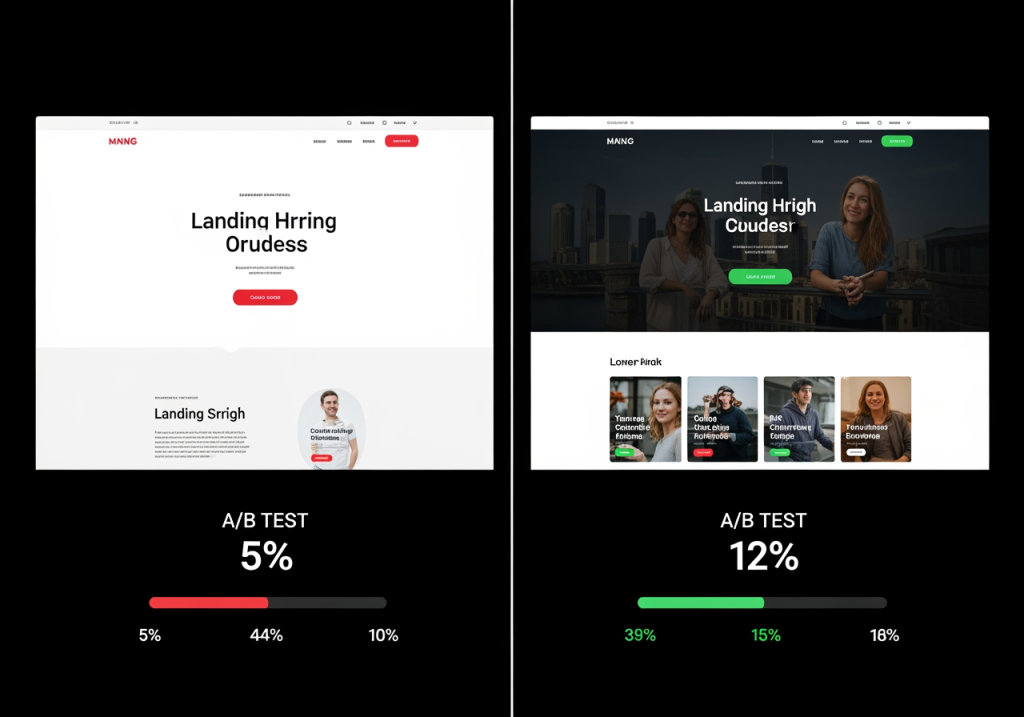
One of the cornerstones of CRO is A/B testing, also known as split testing. This method involves creating two (or more) versions of a webpage or app screen, with only one element changed between them. Half of your audience sees version A (the control), and the other half sees version B (the variation). By tracking how each version performs against a specific goal, you can determine which one is more effective. Wikipedia defines A/B tests as “a randomized experiment with two variants, A and B,” emphasizing the statistical hypothesis testing involved. The goal is to achieve statistical significance, meaning the observed difference in performance is unlikely to be due to random chance. This requires careful hypothesis development, where you articulate what you expect to happen and why, before running the test.
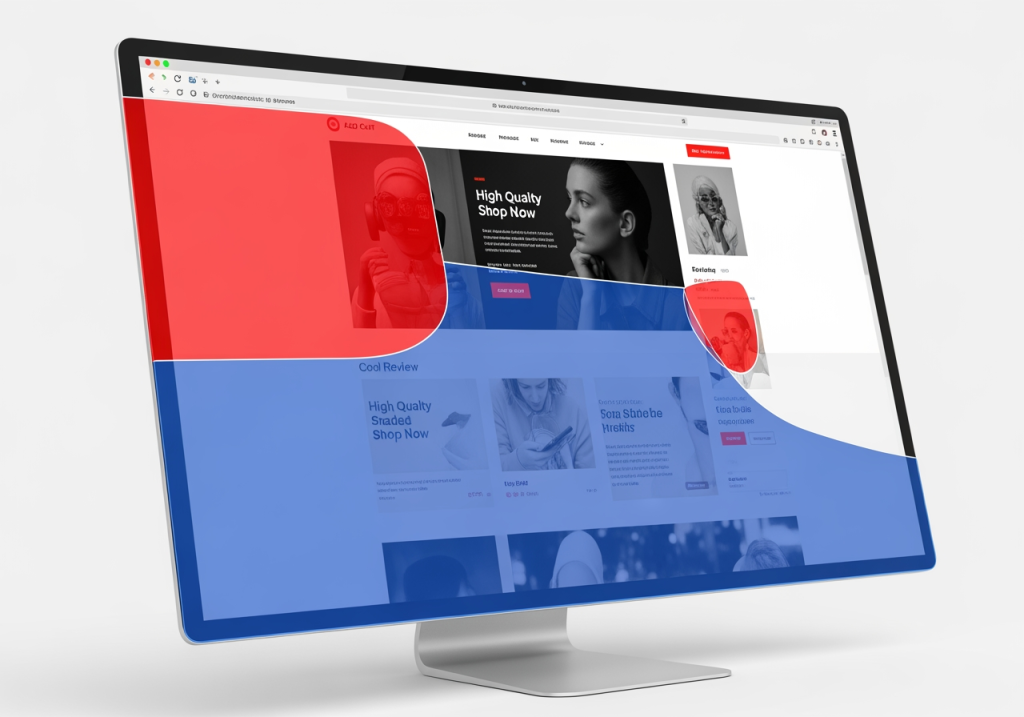
Beyond individual elements, CRO also involves understanding how users interact with your entire page. Unbounce, a leader in landing page optimization, introduced the concept of the “attention ratio.” This refers to the ratio of the number of things a visitor can do on your page (links, CTAs) to the number of things you want them to do (your primary conversion goal). For optimal conversions, the goal is often a 1:1 attention ratio, especially on dedicated landing pages. Too many distractions can lead to decision paralysis, as famously highlighted in a TED Talk by Barry Schwartz on the paradox of choice. By minimizing alternative paths and focusing the user’s attention on a single, clear call to action, you significantly increase the likelihood of conversion. Neil Patel’s guide, Conversion Optimization Made Simple: A Step-by-Step Guide, offers further insights into these foundational principles.
To clarify the scope of conversion efforts, it’s helpful to distinguish between micro and macro conversions:
Feature Micro-conversions Macro-conversions Definition Small steps indicating user engagement/intent Primary goals directly impacting business revenue Examples Newsletter signup, video view, add to cart, download Purchase, lead form submission, demo request, subscription Impact Build momentum, qualify leads, inform user journey Direct revenue, customer acquisition Measurement Often tracked as events or intermediate goals Tracked as ultimate goal completions Optimization Focus on reducing friction, increasing engagement Focus on value proposition, trust, clear CTAs Advanced Strategies for Digital Marketing and Conversion Optimization
Once the fundamental CRO frameworks are in place, we can dig into more advanced strategies that fine-tune the user experience and leverage psychological principles to drive conversions. A critical area is landing page optimization. A landing page is often the first interaction a potential customer has with your brand after clicking an ad or link, making its design and content paramount. Optimizing these pages involves ensuring clarity, relevance, and a strong call to action—an approach that becomes more repeatable when you follow a structured process like Predictable conversion optimization. Resources like The Anatomy Of A High Converting Landing Page provide visual examples of effective design.
Social proof is a powerful psychological phenomenon where people assume the actions of others in an attempt to reflect correct behavior. In digital marketing, this translates to showing visitors that others have already trusted and benefited from your product or service. This can take many forms, including customer testimonials, star ratings, reviews, case studies, and even social media mentions. The concept is rooted in the idea that we often copy others, especially in situations of uncertainty, a phenomenon sometimes referred to as mimetic isomorphism in organizational theory.
Building trust signals is another cornerstone. In an age of skepticism, demonstrating credibility is non-negotiable. This includes security badges, clear privacy policies, money-back guarantees, and professional design. Coupled with trust, urgency and incentives can motivate immediate action. Limited-time offers, countdown timers, and exclusive discounts create a fear of missing out (FOMO), prompting users to convert now rather than later. However, it’s crucial that urgency is genuine and not manipulative, as this can erode trust. Consistency is also key; message matching ensures that the copy and promises made in your ads are seamlessly carried over to your landing pages, reinforcing user expectations and reducing bounce rates. This continuity reassures visitors they are in the right place and that their query will be answered.
Psychological Triggers and User Persuasion
Understanding human psychology is at the heart of effective conversion optimization. Beyond the technical aspects, tapping into universal behavioral triggers can significantly influence a user’s decision-making process. Robert Cialdini’s work, highlighted in his book Influence: Science and Practice, outlines several principles that are highly applicable to CRO.
Social proofs are among the most potent. As discussed earlier, people are more likely to convert if they see others have done so successfully. This is why showcasing customer testimonials, reviews, and case studies is so effective. For example, Sony Vaio successfully A/B tested elements on their site to improve conversion, demonstrating the power of iterative improvements informed by user behavior. Similarly, ComScore and Secret Escapes have leveraged various testing methods to optimize their online experiences, often incorporating elements of social proof to build confidence.
Urgency and scarcity play on the fear of missing out. “Limited stock,” “offer ends soon,” or “only a few spots left” can prompt immediate action. However, these must be authentic to maintain credibility. Authority can be established through expert endorsements, industry awards, or showcasing your brand’s leadership in a particular field. When visitors perceive your brand as an authority, they are more likely to trust your recommendations and offerings.
Reciprocity suggests that people are more likely to give back when they’ve received something first. Offering valuable free content, a free trial, or a consultation can build goodwill and make users more inclined to convert later. Finally, ensuring your website and conversion paths reflect these psychological principles, rather than just technical efficiency, allows us to create experiences that genuinely persuade and convert. By thoughtfully integrating these elements, we can build a more compelling and persuasive user journey.
Technical Performance and Content as Conversion Drivers
Even the most compelling offers and persuasive messaging can fall flat if your website isn’t technically sound. Technical performance and the quality of your content are foundational to driving conversions, directly impacting user experience and trust.
Website speed and performance are non-negotiable in today’s digital world. Users expect instant gratification, and slow loading times are a major deterrent. Research shows that a mere 100 ms increase in page loading time can result in a 1% decrease in sales. Decreasing page load time by just 0.1 seconds leads to 8.4% more conversions and a 9.2% higher average order value. Pages that load in 1 second convert 2.5x better than those that take 5 seconds. Optimizing images, leveraging browser caching, minimizing code, and using a Content Delivery Network (CDN) are all crucial steps to ensure your site loads quickly and efficiently.
Mobile optimization is equally vital. With a significant portion of internet traffic originating from mobile devices, a responsive and mobile-friendly website is no longer optional. A poor mobile experience can lead to high bounce rates and lost conversions. Your site must adapt seamlessly to different screen sizes, and touch targets should be easily clickable.
User Experience (UX) design encompasses the overall interaction a user has with your website. An intuitive, easy-to-steer, and visually appealing interface reduces friction and guides users effortlessly towards conversion goals. Navigation confusion alone accounts for about 37% of failed conversions. Tools like fivesecondtest.com can quickly assess if your page’s purpose is clear within the first few seconds. A well-designed UX ensures that visitors can find what they’re looking for, understand your value proposition, and complete desired actions without frustration.
Content Strategy for High-Converting Funnels
Content is not just for informing; it’s a powerful conversion tool when strategically deployed. Every piece of content, from a blog post to a product video, should serve a purpose within the conversion funnel.
Compelling Calls to Action (CTAs) are the direct prompts that guide users to take the next step. They should be clear, concise, and action-oriented, using strong verbs like “Find,” “Get Started,” or “Download Now.” The placement, color, and size of your CTAs can significantly impact their effectiveness, making A/B testing a crucial part of their optimization. Integrating AI into the creation and optimization of these CTAs can further improve their performance, offering insights into language, timing, and personalization for better AI marketing and conversion outcomes.
Engaging blog posts can drive conversions by attracting organic traffic, educating potential customers, and building trust and authority. While not always a direct conversion point, a well-written blog post can nurture leads, answer common questions, and guide users towards product pages or lead magnets. Strategic keyword research and valuable content are key.
Leveraging video content is increasingly important. Videos are highly engaging and can convey complex information quickly and effectively. Pages with videos keep visitors 88% longer on site, and explainer videos can boost conversions by up to 114%. Tutorials, product demos, and customer testimonials in video format can clarify value propositions and build immediate rapport. Furthermore, interactive content, such as quizzes, calculators, or assessments, can increase conversion by 4x. This type of content actively involves the user, making the experience more personalized and memorable, leading to higher engagement and conversion rates.
Form Optimization and Lead Capture
Forms are critical touchpoints for lead generation and data collection, yet they are also notorious drop-off points in the conversion funnel. Optimizing your forms is crucial for maximizing lead capture.
The primary goal of form optimization is friction reduction. Every field you ask a user to fill out adds a small amount of friction. The more friction, the higher the chance of abandonment. Research indicates that 27% of users pointed to form length as the reason they abandoned a form. Therefore, field minimization is a key strategy: only ask for absolutely essential information. If you need more data, consider progressive profiling, where you collect additional information over time through subsequent interactions.
Lead magnets – valuable content offered in exchange for contact information (e.g., e-books, webinars, templates) – are excellent for incentivizing form completion. The perceived value of the magnet must outweigh the perceived cost of providing personal data. For dedicated lead generation, crafting an effective Lead Generation Landing Page that clearly articulates the value of the magnet and simplifies the form process is vital.
For longer forms, consider multi-step forms, breaking them into smaller, less intimidating sections. This can make the process feel less daunting and increase completion rates. Finally, always include trust seals (e.g., SSL certificates, security badges) and clear privacy assurance statements to alleviate user concerns about data security and how their information will be used. A transparent and secure form experience builds confidence and encourages conversion.
Data Analysis, Funnel Optimization, and AI Integration
The journey from visitor to customer is rarely linear. It involves multiple touchpoints and decisions, forming a “conversion funnel.” Understanding and optimizing this funnel requires robust data analysis and the right tools.
There are numerous 34 CRO tools available, each designed to shed light on different aspects of user behavior and funnel performance. Core to this is funnel analysis, which involves mapping out the steps users take to complete a conversion and identifying where they drop off. Tools for Analyzing Your Conversion Funnel help visualize this journey.
Google Analytics is an indispensable tool for tracking website traffic, user behavior, and conversion goals. It allows us to set up goal funnels and see the exact path users take, highlighting bottlenecks. Beyond quantitative data, tools for Studying and Mapping User Behaviour like heatmaps and session recordings offer qualitative insights. Heatmaps visually represent where users click, scroll, and spend time on a page, while session recordings allow us to watch individual user journeys, revealing points of confusion, frustration, or engagement. This combination of “what” (analytics) and “why” (behavioral tools) is incredibly powerful for identifying optimization opportunities. For instance, analyzing an example for cart abandonment can pinpoint the exact moment users leave their shopping carts.

The visual representation of a conversion funnel, such as An example of funnel visualization, makes it easy to spot where users are dropping off, prompting targeted optimization efforts at those specific stages.
Identifying and Fixing Funnel Bottlenecks
Once you have a clear picture of your conversion funnel and user behavior, the next step is to identify and systematically address funnel bottlenecks. These are the points in the customer journey where a significant number of users abandon the process.
Customer journey mapping helps visualize the entire path a customer takes, from initial awareness to post-purchase advocacy. Trew Marketing provides abstract funnel models that illustrate this journey. By understanding the motivations and pain points at each stage, we can tailor our optimization efforts. For example, if many users are exiting on a product page, it might indicate unclear product descriptions, insufficient imagery, or a lack of trust signals. An example of identifying micro-conversion goals can help pinpoint these issues.
Exit pages with high bounce rates are clear indicators of problems. Analyzing the content, design, and calls to action on these pages can reveal why users are leaving. Perhaps the page isn’t meeting their expectations, or the next step isn’t clear enough.
For users who do drop off, retargeting and remarketing strategies can bring them back. While often used interchangeably, there’s a subtle distinction. Google Remarketing typically refers to showing ads to users who have interacted with your website or app, using data from pixels. Remarketing, in a broader sense, can also involve targeting existing email lists with personalized offers. Platforms like Facebook’s Custom Audience and Google’s Customer Match allow you to upload customer lists and serve targeted ads, ensuring that potential converters are gently nudged back into your funnel. These strategies are particularly effective for recovering abandoned carts or re-engaging leads who haven’t converted yet.
Common Pitfalls and Getting Started with CRO
While the benefits of CRO are clear, many businesses stumble in their optimization efforts. Avoiding common pitfalls is crucial for sustainable success.
One major mistake is focusing on vanity metrics – numbers that look good but don’t translate to actual business value (e.g., page views without conversions). True CRO focuses on metrics directly tied to revenue and business goals. Another pitfall is over-testing or testing too many elements at once, which makes it impossible to attribute success or failure to a specific change. It’s best to test one significant element at a time to maintain clarity.
A lack of a clear hypothesis is also detrimental. Every test should start with a specific “we believe that [change] will lead to [outcome] because [reason]” statement. Without this, tests become random tweaks rather than scientific experiments. Ignoring qualitative data (user feedback, surveys, session recordings) in favor of purely quantitative metrics can also lead to missed opportunities, as qualitative data often reveals the “why” behind user behavior.
For businesses with limited traffic, the approach to CRO needs to be adapted. Resources like Conversion Rate Optimization When You Don’t Have Much Traffic offer strategies for making the most of smaller data sets, such as focusing on high-impact changes and qualitative insights. A comprehensive list like 53 Conversion Rate Optimization Tools: Comprehensive Guide can help businesses find the right tools regardless of their traffic volume.
Getting started with CRO involves a continuous cycle of identifying goals, gathering data, forming hypotheses, testing, analyzing results, and iterating. It’s not a one-time project but an ongoing commitment. Thinking about What comes next after a conversion is also vital. A well-defined post-conversion strategy ensures that a converted customer continues their journey with your brand, whether through nurturing sequences, upsells, or loyalty programs. This continuous improvement mindset, supported by clear goal-setting (like those outlined in a 2022 OKR impact report showing 98% of companies had better visibility into performance with clear goal systems), ensures that your CRO efforts lead to sustained growth.
Frequently Asked Questions about Digital Marketing and Conversion Optimization
What is the difference between a macro and micro conversion?
Macro conversions are primary business goals like a completed purchase or a signed contract, while micro conversions are smaller steps that indicate interest, such as newsletter signups, video views, or adding an item to a cart. Macro conversions are the ultimate desired actions, whereas micro conversions are the stepping stones leading to them.
How do I calculate my website’s conversion rate?
The conversion rate is calculated by dividing the total number of conversions by the total number of unique visitors during the same period, then multiplying by 100 to get a percentage. For example, if you had 50 conversions from 1,000 visitors, your conversion rate would be (50 / 1000) * 100 = 5%.
Why is CRO considered more cost-effective than increasing traffic?
CRO focuses on getting more value from the visitors you already have, which is significantly cheaper than paying for new traffic through ads or SEO. It’s often cited that it costs 5-25 times more to acquire a new customer than to convert an existing lead or visitor. By optimizing your existing assets, you increase the efficiency of all your marketing spend without needing to expand your budget for traffic acquisition.
Conclusion
In the dynamic world of digital marketing, maximizing your ROI hinges on a deep understanding and continuous application of conversion optimization principles. We’ve explored how a systematic approach, combining robust data analysis, strategic frameworks like A/B testing, and a keen eye on user psychology, can transform your digital presence. From optimizing page speed and mobile experience to crafting compelling content and streamlining forms, every element plays a crucial role in guiding users toward conversion.
The integration of AI-driven marketing is not just a trend but a powerful accelerator, enabling more precise targeting, personalized experiences, and efficient optimization. When paired with smart paid advertising strategies, this synergy creates a formidable engine for growth. By focusing on holistic conversion strategies, businesses can ensure that every marketing dollar is spent effectively, turning more visitors into loyal customers. Embracing a data-driven culture and committing to ongoing optimization is not just about improving numbers; it’s about building a more resilient, profitable, and customer-centric business for the long term.
